Authenticity - the quality of being real or true: Cambridge Dictionary
I was prompted to look at the subject of authenticity in architectural photography after talking with Professor Robert Adam about authenticity in architecture, writes Lynne Bryant.
Photography has always lent itself to manipulation. In 1917 a sixteen year old Elsie Wright borrowed her father's camera and produced images of her nine year old cousin beguiled by four dancing fairies. It was a deception Sir Arthur Conan Doyle believed if true would support the case for his long-standing interest in spiritualism. Speaking to the BBC in 1983, Frances Griffiths said,' I never thought of being a fraud, it was just Elsie and I having a bit of fun.' The fairies were made with paper cut-outs and hatpins.
Manipulation of photographs has always been used for attempting to change history - think Stalin propaganda erasing opponents from group images.
Leap forward to 1990 and Photoshop. There was talk of introducing a symbol, an M in a circle, similar to the copyright symbol, to show an image had been manipulated. It didn't happen.
Today, how many images of architecture would have to have that mark if it had been introduced? Not minor tweaks but larger scale changes, and today Photoshop incorporates AI tools.
Should we be advocating authenticity in architectural photography - does it matter?
Who decides, who notices and how far should we go?
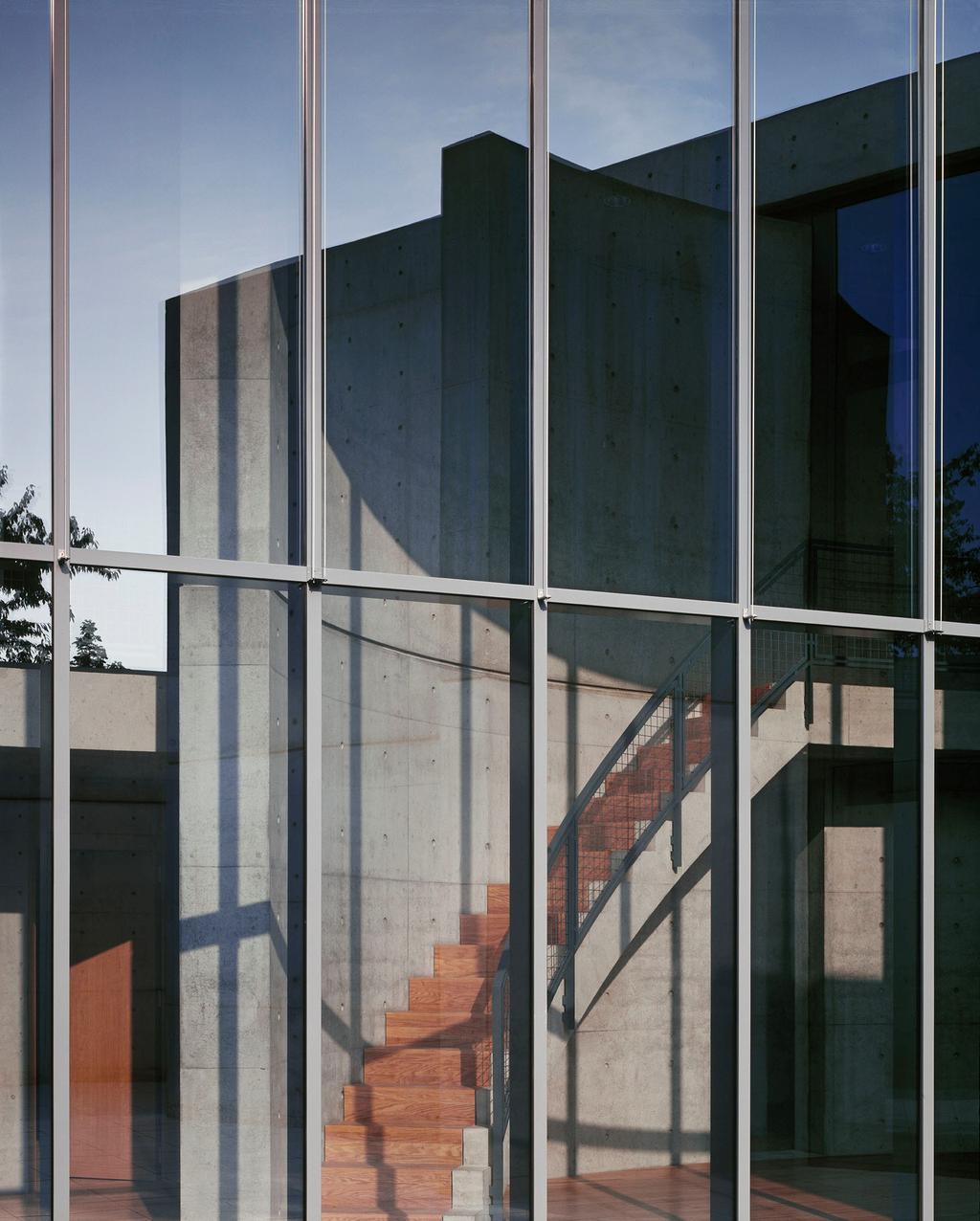
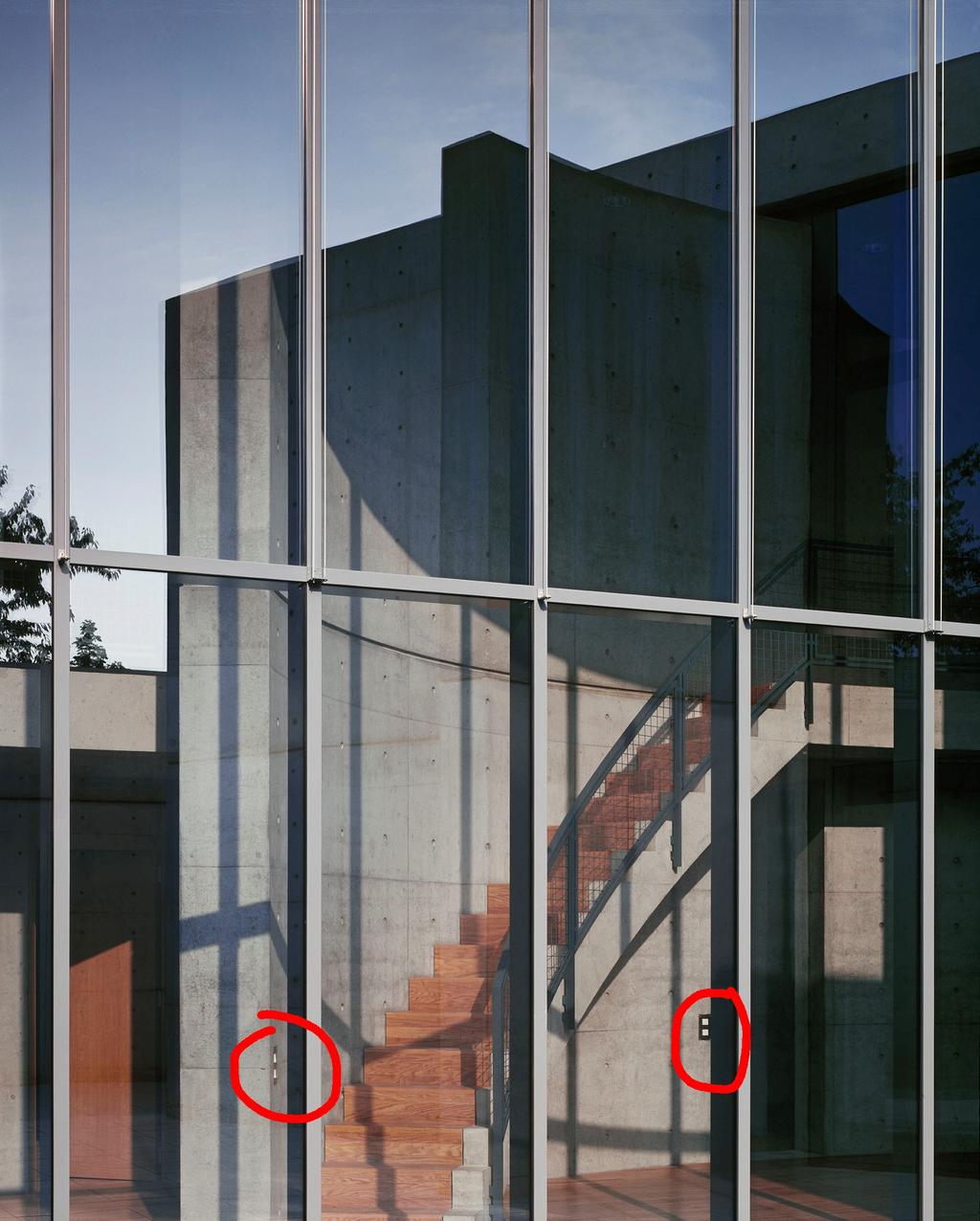
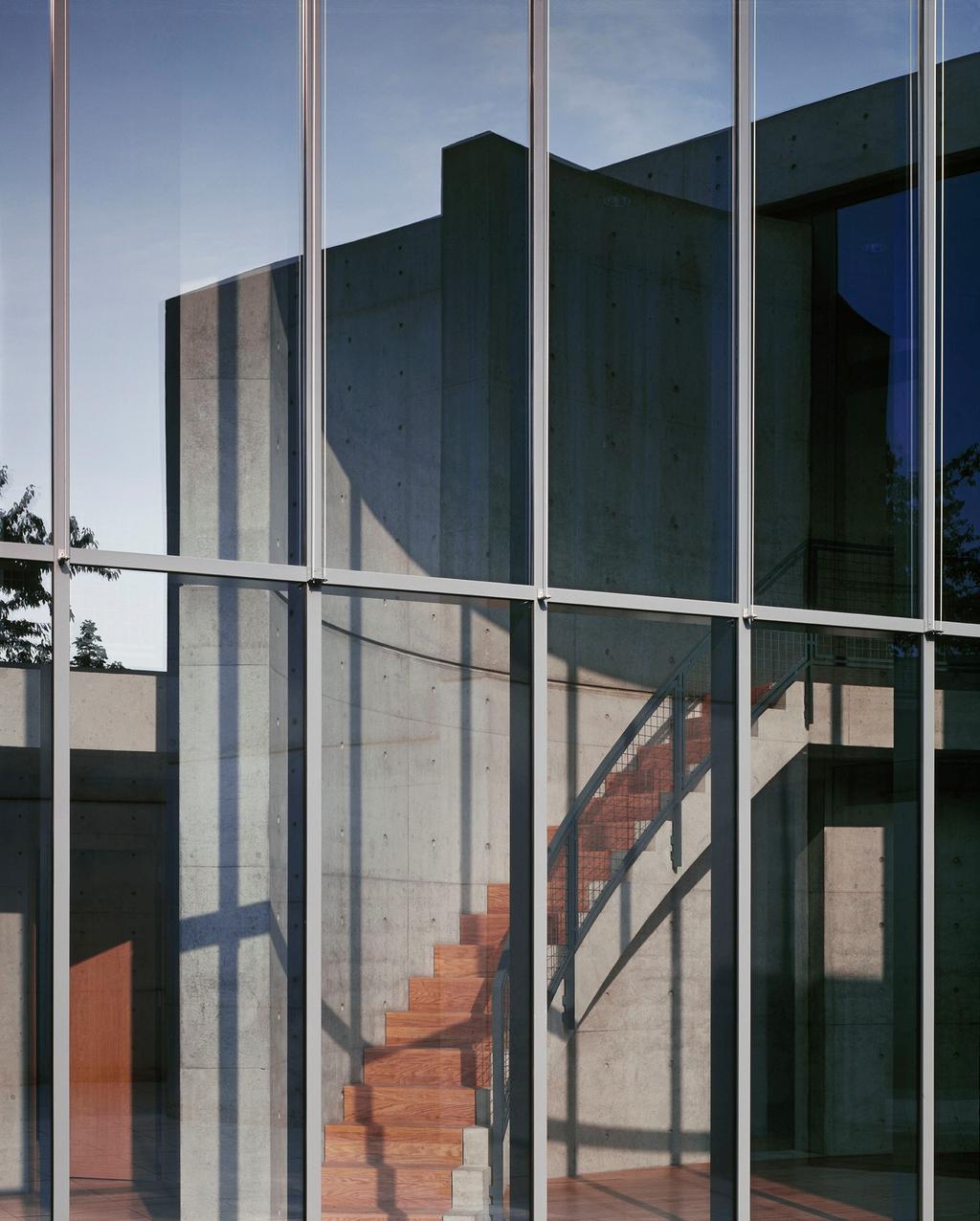
In 1993, the analogue era, Richard photographed the Conference Centre for Vitra by Tadao Ando. He always found the light switches distracted from being drawn into the depth of the space. In 2024 when the image was selected for the book of his work he made the decision, 'I have the technology - the light switches can go.'
Did anyone ever complain about the light switches ? No - in fact we have a complimentary letter from Vitra.
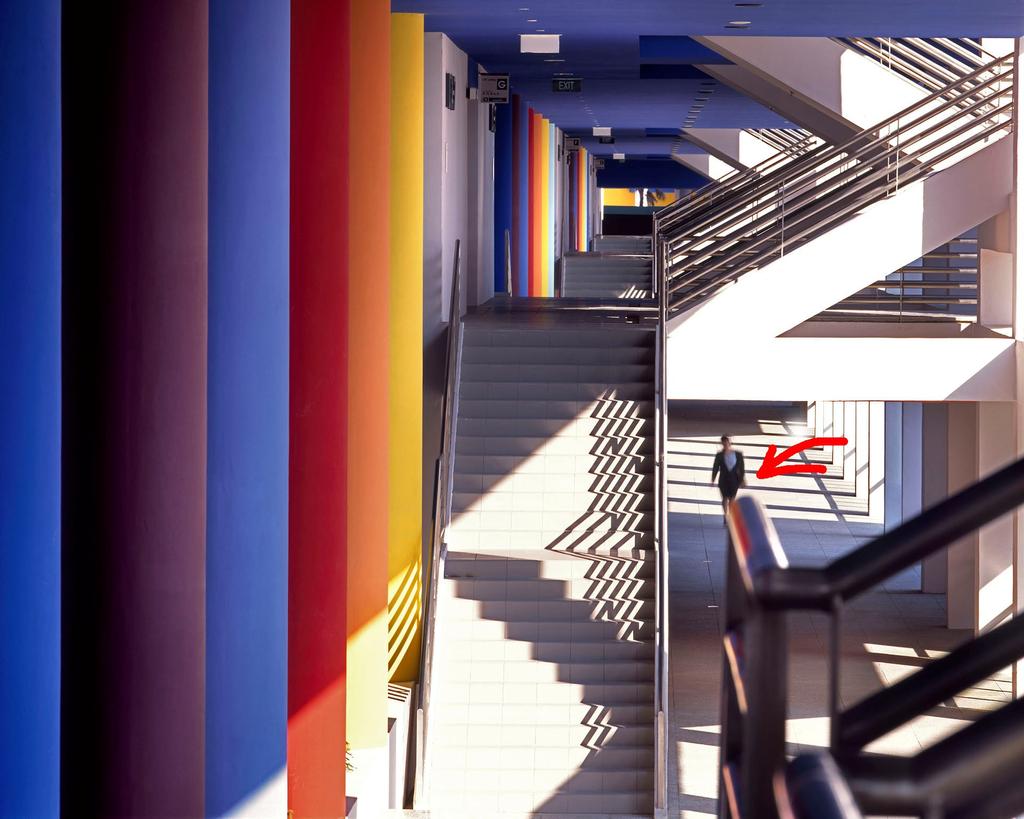
And yet another annoyance from the 1988 shoot at Temasek Polytechnic by Stirling and Wilford he chose to keep.
When another photographer suggested, move the person if it annoys you, Richard declined. It's a reminder of shooting on
5 x 4 film, you want a person in the shot - but you're rarely in a position to choreograph. The light is right and you can't come back another day. The person visually clashes with the hand rail.
Papers were written, articles abound criticising architectural photographers for empty buildings. Seen in context the majority are authentic. In the time of print, photographs had to be taken often weeks before a building opened - judicious editing by the photographer to only shoot areas that appeared finished. There were no visitors in the museum or staff in the offices. We were personally criticised in an academic paper because there were so few people in Richard's 1980's images of Centraal Beheer, the vibrant ground breaking 1970's office in the Netherlands by Herman Hertzberger. Our client was Designers Journal for part of their 'revisted' series. The management had refused us access to photograph on a weekday, and at the weekend the complex was almost empty.
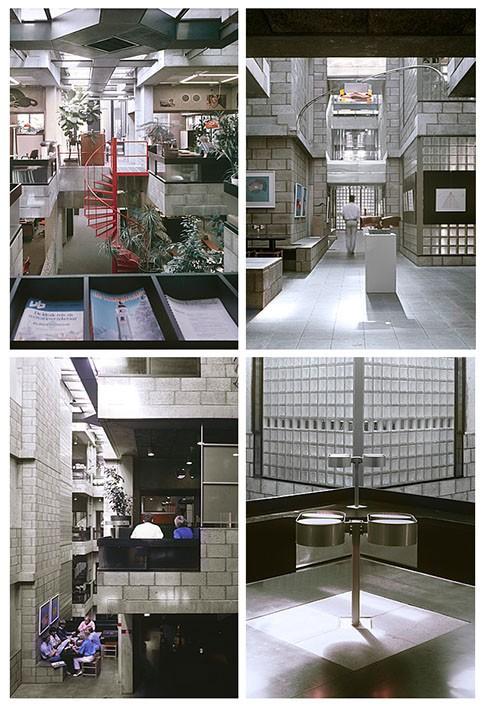
Very few staff came in at weekends, me and an assistant helped make up the numbers. The photographs were authentic, but didn’t match the narrative.
When an energetic young photographer produced images of architecture full of people, he was lauded. They were wonderful, but the buildings were not in countries where the same privacy and permissions were as stringent. They really were very natural and authentic. The desire for populated spaces was again on the agenda.
At a similar time, Photoshop and digital rendering appeared to promote some photographers adding people into their images and occasionally ‘bleaching’ the overall image. Was it the photographers or the client that wanted the final images to mimic and be authentic to rendering? Then there is deliberate and documented change . 'The Pevsner way of seeing', Pevsner’s masterwork - 1951-1974, A 46 volume county by county series catalogued thousands of buildings, civic, clerical and domestic. The books were, and still are, both academic and accessible.
When architectural photographer Martine Hamilton Knight was commissioned to update the imagery for the revised edition of Nottinghamshire, her expertise in Photoshop was as important as her photography skills. The images had to be timeless. Cars, posters, shop graphics and people all had to disappear. All attention had to be directed at the buildings to create a publication that will be relevant in decades to come without time bound distractions.
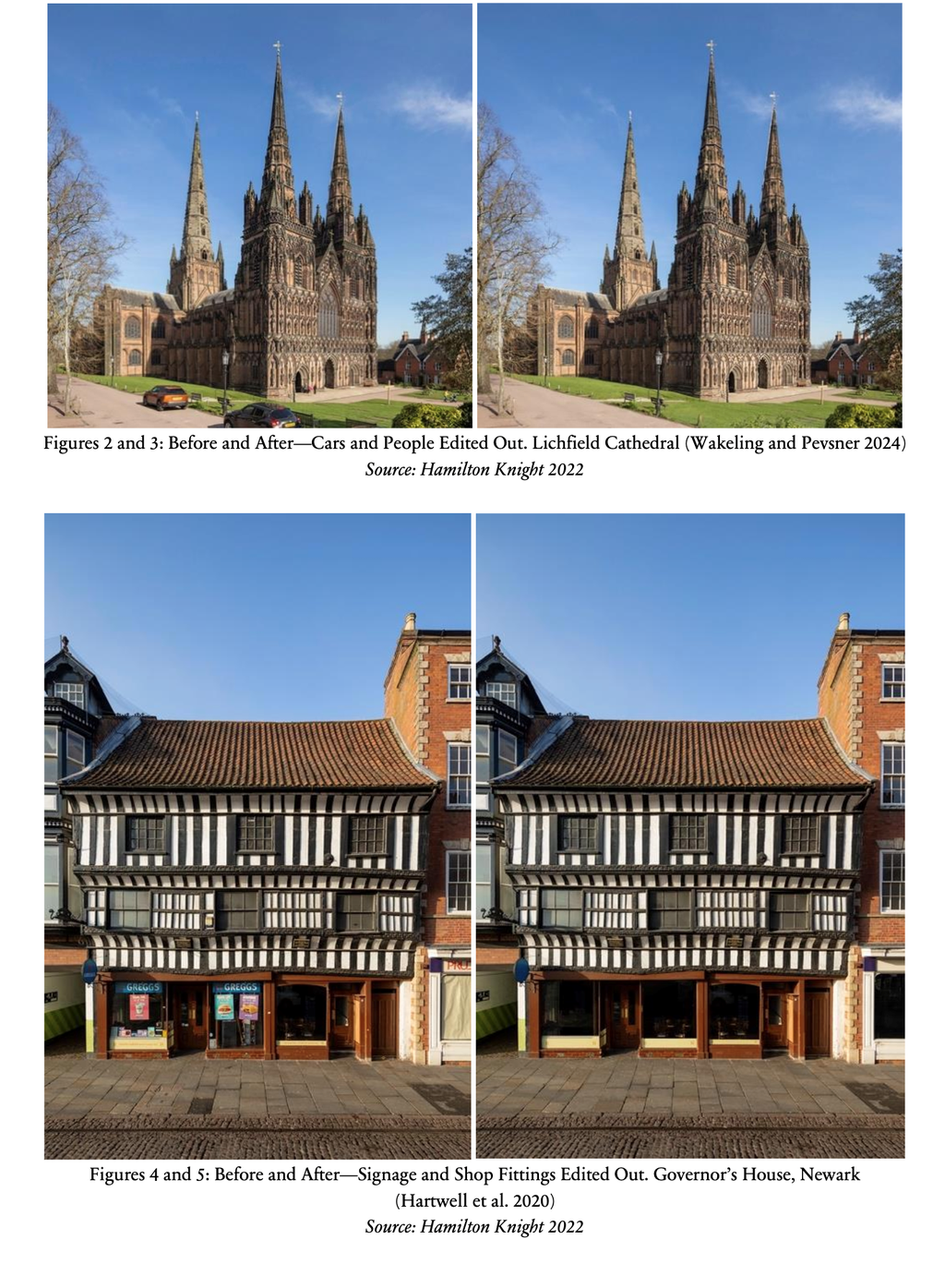
'Pevsner's are seen as an authoritative visual document of each structure that is not judged by the date or time it was recorded' Martine Hamilton Knight 2022 from her paper Architecture seen through the eye of the lens and AI.
Perhaps everything is authentic within its time - and perhaps the question is: is it honest?
Honest: Telling the truth or able to be trusted: Cambridge Dictionary
Who cares, does it matter and what are the implications for history?
Musings from my life in photography and architecture ©Lynne BryantAll photographs are copyright.They may not be downloaded, scraped or copied in anyway without prior permission.
Founder Partner